
researchforumonline/mcp-titan-cognative-memory
Developer toolsA public overview of ZeroThink, OpenZero, FreeWebPanel, ZSEC, and the wider TalkToAI infrastructure. Watch it here: https://www.youtube.com/watch?v=R52hsRdCmSM
Overview
A public overview of ZeroThink, OpenZero, FreeWebPanel, ZSEC, and the wider TalkToAI infrastructure. Watch it here: https://www.youtube.com/watch?v=R52hsRdCmSM Colaboration between @jasonkneen and @ExpressionsBot Follow us on X - jasonkneen - megaprompt An implementation inspired by Google Research's paper "Generative AI for Programming: A Common Task Framework". This server provides a neural memory system that can learn and predict sequences while maintaining state through a memory vector, following principles outlined in the research for improved code generation and understanding. This implementation draws from the concepts presented in the Google Research paper (Muennighoff et al., 2024) which introduces a framework for evaluating and improving code generation models.
README
🧠 MCP - Titan Memory Server implementation
Featured TalkToAI Ecosystem Video
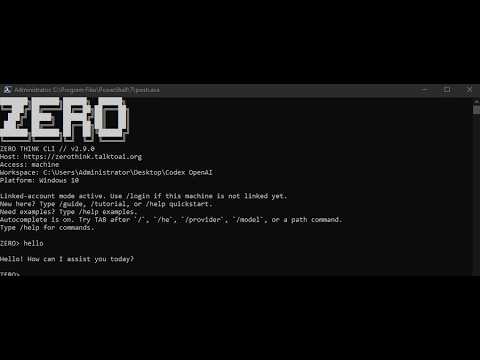
A public overview of ZeroThink, OpenZero, FreeWebPanel, ZSEC, and the wider TalkToAI infrastructure. Watch it here: https://www.youtube.com/watch?v=R52hsRdCmSM
Colaboration between @jasonkneen and @ExpressionsBot
Follow us on X
An implementation inspired by Google Research’s paper “Generative AI for Programming: A Common Task Framework”. This server provides a neural memory system that can learn and predict sequences while maintaining state through a memory vector, following principles outlined in the research for improved code generation and understanding.
📚 Research Background
This implementation draws from the concepts presented in the Google Research paper (Muennighoff et al., 2024) which introduces a framework for evaluating and improving code generation models. The Titan Memory Server implements key concepts from the paper:
- Memory-augmented sequence learning
- Surprise metric for novelty detection
- Manifold optimization for stable learning
- State maintenance through memory vectors
These features align with the paper’s goals of improving code understanding and generation through better memory and state management.
🚀 Features
- Neural memory model with configurable dimensions
- Sequence learning and prediction
- Surprise metric calculation
- Model persistence (save/load)
- Memory state management
- Full MCP tool integration
Downloads, Releases, And Discovery
| Need | Link |
|---|---|
| GitHub repository | https://github.com/ResearchForumOnline/mcp-titan-cognative-memory |
| Source ZIP | https://github.com/ResearchForumOnline/mcp-titan-cognative-memory/archive/refs/heads/main.zip |
| GitHub releases | https://github.com/ResearchForumOnline/mcp-titan-cognative-memory/releases |
| TalkToAI ecosystem | https://talktoai.org/ |
| Docs hub | https://docs.talktoai.org/ |
MCP memory server implementation for sequence learning, stateful memory vectors, model persistence, and memory-augmented tool workflows.
Clone, install dependencies, build, and connect it to an MCP-compatible client.
git clone https://github.com/ResearchForumOnline/mcp-titan-cognative-memory.git
cd mcp-titan-cognative-memory
npm install
npm run build
Search-friendly topics: MCP server, cognitive memory, Titan memory, model context protocol, local agent memory, AI memory server.
📦 Installation
# Install dependencies
npm install

# Build the project
npm run build

# Run tests
npm test
🛠️ Available MCP Tools
1. 🎯 init_model
Initialize the Titan Memory model with custom configuration.
{
  inputDim?: number;  // Input dimension (default: 64)
  outputDim?: number; // Output/Memory dimension (default: 64)
}
2. 📚 train_step
Perform a single training step with current and next state vectors.
{
  x_t: number[];    // Current state vector
  x_next: number[]; // Next state vector
}
3. 🔄 forward_pass
Run a forward pass through the model with an input vector.
{
  x: number[]; // Input vector
}
4. 💾 save_model
Save the model to a specified path.
{
  path: string; // Path to save the model
}
5. 📂 load_model
Load the model from a specified path.
{
  path: string; // Path to load the model from
}
6. ℹ️ get_status
Get current model status and configuration.
{} // No parameters required
7. 🔄 train_sequence
Train the model on a sequence of vectors.
{
  sequence: number[][]; // Array of vectors to train on
}
🌟 Example Usage
// Initialize model
await callTool('init_model', { inputDim: 64, outputDim: 64 });

// Train on a sequence
const sequence = [
  [1, 0, 0, /* ... */],
  [0, 1, 0, /* ... */],
  [0, 0, 1, /* ... */]
];
await callTool('train_sequence', { sequence });

// Run forward pass
const result = await callTool('forward_pass', {
  x: [1, 0, 0, /* ... */]
});
🔧 Technical Details
- Built with TensorFlow.js for efficient tensor operations
- Uses manifold optimization for stable learning
- Implements surprise metric for novelty detection
- Memory management with proper tensor cleanup
- Type-safe implementation with TypeScript
- Comprehensive error handling
🧪 Testing
The project includes comprehensive tests covering:
- Model initialization and configuration
- Training and forward pass operations
- Memory state management
- Model persistence
- Edge cases and error handling
- Tensor cleanup and memory management
Run tests with:
npm test
🔍 Implementation Notes
- All tensor operations are wrapped in
tf.tidy()for proper memory management - Implements proper error handling with detailed error messages
- Uses type-safe MCP tool definitions
- Maintains memory state between operations
- Handles floating-point precision issues with epsilon tolerance
📝 License
MIT License - feel free to use and modify as needed!
Install
This server does not publish a one-line install command.
Open the repository installation guide New to MCP? Start with the mcpskill.org guide →