
kubeflow/mcp-server 是从 https://github.com/kubeflow/mcp-server. 导入的 MCP 服务器候选
概览
kubeflow/mcp-server 是从 https://github.com/kubeflow/mcp-server. 导入的 MCP 服务器候选
概述(AI 翻译)
提案:KEP-936 ·路线图 ·安全 ·贡献
概述
Kubeflow MCP 服务器将 Kubeflow 训练操作作为模型上下文协议工具,使 AI 代理(Claude、Cursor、Claude Code 或任何自定义代理等)能够通过自然语言规划、提交、监控和管理训练任务——用户无需直接学习 Kubernetes 或 Kubeflow SDK。
福利
- Agent-Native:工具通过MCP自动发现——无需手动API布线
- 引导工作流程:阶段排序及下一步提示(计划→发现→列车→监控)
- 预览后提交:每次变异操作都需要明确确认
- 安全优先:人物门控、命名空间强制执行、输入验证、承载/JWT 认证
- 多平台:自动检测OpenShift、EKS、GKE,并提供平台特定指导
- 代币高效:渐进/语义模式将23个工具压缩为2-3个元工具
- 可扩展:用于额外 Kubeflow 客户端的插件架构(TODO:优化器、集线器)
演示
开始
新来吗?请查看快速启动与故障排除指南,了解从安装到MCP客户端的逐步路径。
从 PyPI 安装
本页由 AI 翻译,技术细节请以原文为准。
README
以下为原文 README 节选,完整内容请查看原文。
Kubeflow MCP Server




Proposal: KEP-936 · ROADMAP · SECURITY · CONTRIBUTING
Overview
The Kubeflow MCP Server exposes Kubeflow Training operations as Model Context Protocol tools, enabling AI agents (Claude, Cursor, Claude Code, or any custom agents etc.) to plan, submit, monitor, and manage training jobs through natural language — without users needing to learn Kubernetes or the Kubeflow SDK directly.
Benefits
- Agent-Native: Tools auto-discovered via MCP — no manual API wiring
- Guided Workflow: Phase ordering with next-step hints (Plan → Discover → Train → Monitor)
- Preview-Before-Submit: Every mutating operation requires explicit confirmation
- Security-First: Persona gating, namespace enforcement, input validation, bearer/JWT auth
- Multi-Platform: Auto-detects OpenShift, EKS, GKE with platform-specific guidance
- Token-Efficient: Progressive/semantic modes compress 23 tools into 2-3 meta-tools
- Extensible: Plugin architecture for additional Kubeflow clients (TODO: optimizer, hub)
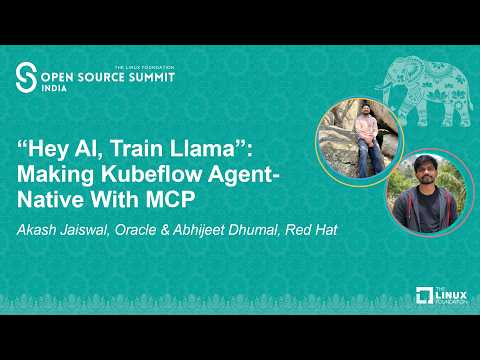
Demo
Get Started
New here? See the Quickstart & Troubleshooting guide for a step-by-step path from installation to a working MCP client.
Install from PyPI
pip install kubeflow-mcp
Install from source (development)
git clone https://github.com/kubeflow/mcp-server.git
cd mcp-server
make install-dev
Prerequisites
Before starting the Kubeflow MCP Server, make sure the following requirements are available:
- Python 3.10, 3.11, or 3.12
- A running Kubernetes cluster
kubectlinstalled and available inPATH- A kubeconfig configured for the target cluster
- Kubeflow Trainer installed in the cluster
- Kubeflow Trainer CRDs and at least one
ClusterTrainingRuntime - Kubernetes permissions for the namespace you train in, plus cluster-scoped read access for planning and runtime discovery (see RBAC Configuration)
Verify the connection and your permissions in the target namespace. Each
安装
docker run --rm -p 8000:8000 \配置
{
  "mcpServers": {
    "kubeflow": {
      "url": "http://localhost:8000/mcp",
      "headers": { "Authorization": "Bearer my-secret-token" }
    }
  }
}