
이 페이지는 AI로 자동 번역되었습니다. 기술적인 세부 사항은 원문을 확인하세요. 원문 보기
kubeflow/mcp-server는 MCP 서버 후보자로 https://github.com/kubeflow/mcp-server.에서 가져온
개요
kubeflow/mcp-server는 MCP 서버 후보자로 https://github.com/kubeflow/mcp-server.에서 가져온
개요(AI 번역)
제안 : KEP-936 · ROADMAP · 보안 · CONTRIBUTING
개요
Kubeflow MCP Server는 모델 Context Protocol 도구로 Kubeflow Training 작업을 노출하여 AI Agent(Claude, Cursor, Claude Code, 또는 custom Agent etc.)를 계획, 제출, 모니터 및 자연적인 언어를 통해 훈련 작업을 관리할 수 있습니다. 사용자가 Kubernetes 또는 Kubeflow SDK를 직접 배울 필요가 없습니다.
혜택
- Agent-Native: MCP를 통해 자동 발견 - 수동 API 배선 없음
- 필수 워크플로우: 다음 단계 힌트로 주문 단계 (Plan → Discover → Train → Monitor) ** Preview-Before-Submit **: 각 mutating 가동은 급행 확인을 요구합니다
- 보안-First: Persona gating, namespace 집행, 입력 유효성 검사, bearer/JWT auth
- Multi-Platform: Auto-detects OpenShift, EKS, GKE 플랫폼별 지침
- 토큰 효율성: Progressive/semantic 형태는 23의 공구를 2-3의 메타 공구로 압축합니다
- Extensible: 추가 Kubeflow 클라이언트를 위한 플러그인 아키텍처 (TODO: 낙관자, 허브)
데모
시작하기
여기에 새로운? **Quickstart & Troubleshooting guide ** 설치에서 작업 MCP 클라이언트로 단계별 경로에 대한.
PyPI에서 설치
이 페이지는 AI로 자동 번역되었습니다. 기술적인 세부 사항은 원문을 확인하세요.
README
원문 README의 일부입니다. 원문 보기.
Kubeflow MCP Server





Proposal: KEP-936 · ROADMAP · SECURITY · CONTRIBUTING
Overview
The Kubeflow MCP Server exposes Kubeflow Training operations as Model Context Protocol tools, enabling AI agents (Claude, Cursor, Claude Code, or any custom agents etc.) to plan, submit, monitor, and manage training jobs through natural language — without users needing to learn Kubernetes or the Kubeflow SDK directly.
Benefits
- Agent-Native: Tools auto-discovered via MCP — no manual API wiring
- Guided Workflow: Phase ordering with next-step hints (Plan → Discover → Train → Monitor)
- Preview-Before-Submit: Every mutating operation requires explicit confirmation
- Security-First: Persona gating, namespace enforcement, input validation, bearer/JWT auth
- Multi-Platform: Auto-detects OpenShift, EKS, GKE with platform-specific guidance
- Token-Efficient: Progressive/semantic modes compress 23 tools into 2-3 meta-tools
- Extensible: Plugin architecture for additional Kubeflow clients (TODO: optimizer, hub)
Demo
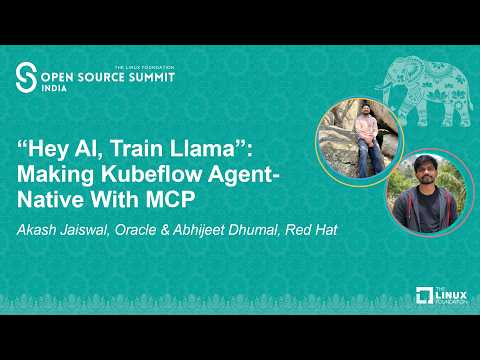
Get Started
New here? See the Quickstart & Troubleshooting guide for a step-by-step path from installation to a working MCP client.
Install from PyPI
pip install kubeflow-mcp
Install from source (development)
git clone https://github.com/kubeflow/mcp-server.git
cd mcp-server
make install-dev
Prerequisites
Before starting the Kubeflow MCP Server, make sure the following requirements are available:
- Python 3.10, 3.11, or 3.12
- A running Kubernetes cluster
kubectlinstalled and available inPATH- A kubeconfig configured for the target cluster
- Kubeflow Trainer installed in the cluster
- Kubeflow Trainer CRDs and at least one
ClusterTrainingRuntime - Kubernetes permissions for the namespace you train in, plus cluster-scoped read access for planning and runtime discovery (see RBAC Configuration)
Verify the connection and your permissions in the target namespace. Each
설치
docker run --rm -p 8000:8000 \설정
{
  "mcpServers": {
    "kubeflow": {
      "url": "http://localhost:8000/mcp",
      "headers": { "Authorization": "Bearer my-secret-token" }
    }
  }
}