
이 페이지는 AI로 자동 번역되었습니다. 기술적인 세부 사항은 원문을 확인하세요. 원문 보기
apisec-inc/mcp-audit는 [[T0]에서 가져온 MCP 서버 후보입니다.
개요
apisec-inc/mcp-audit는 [[T0]에서 가져온 MCP 서버 후보입니다.
개요(AI 번역)
AI 에이전트가 접근할 수 있는 것을 확인해 보세요 - 라이브 전에 확인하세요.
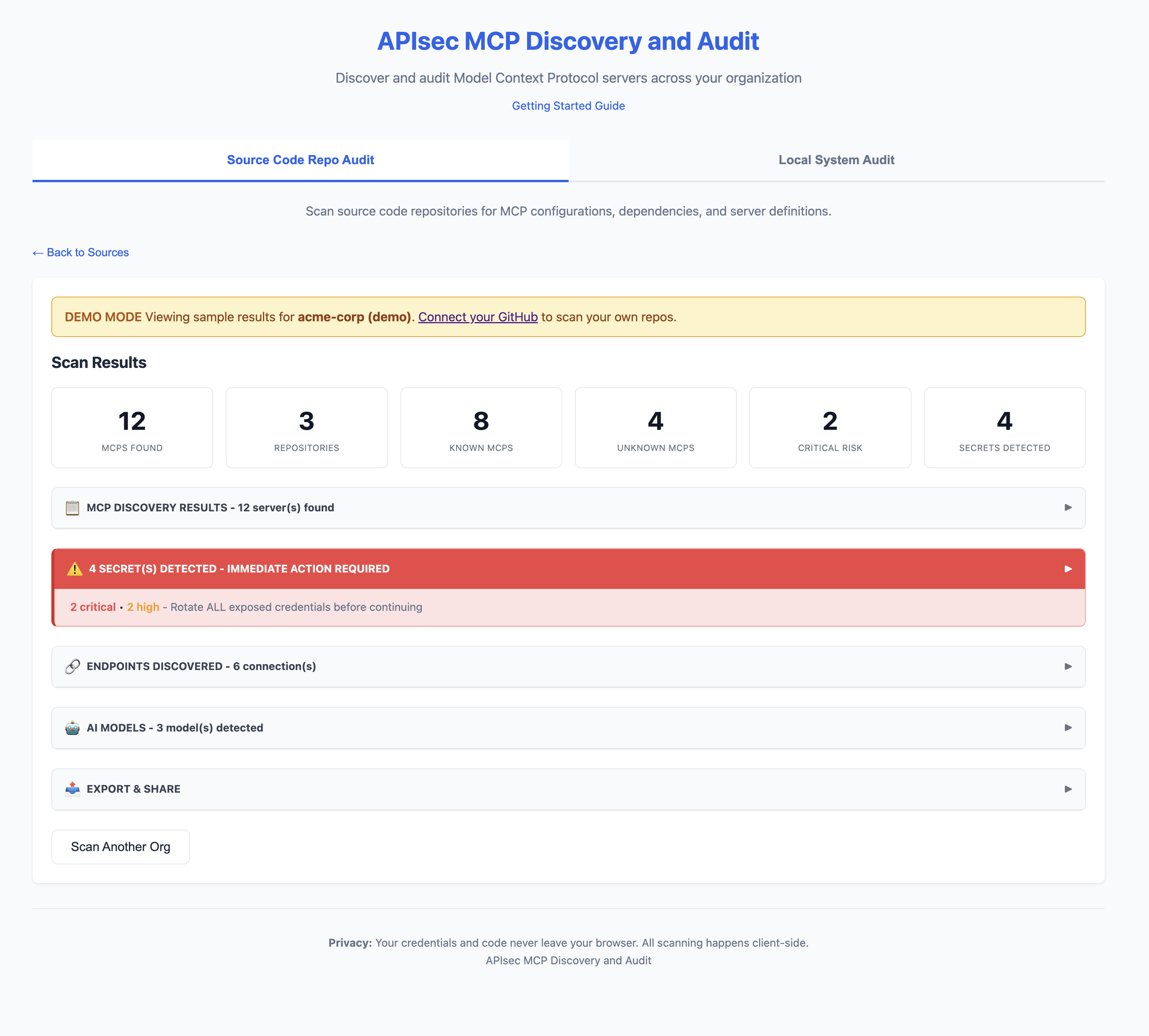
웹 앱
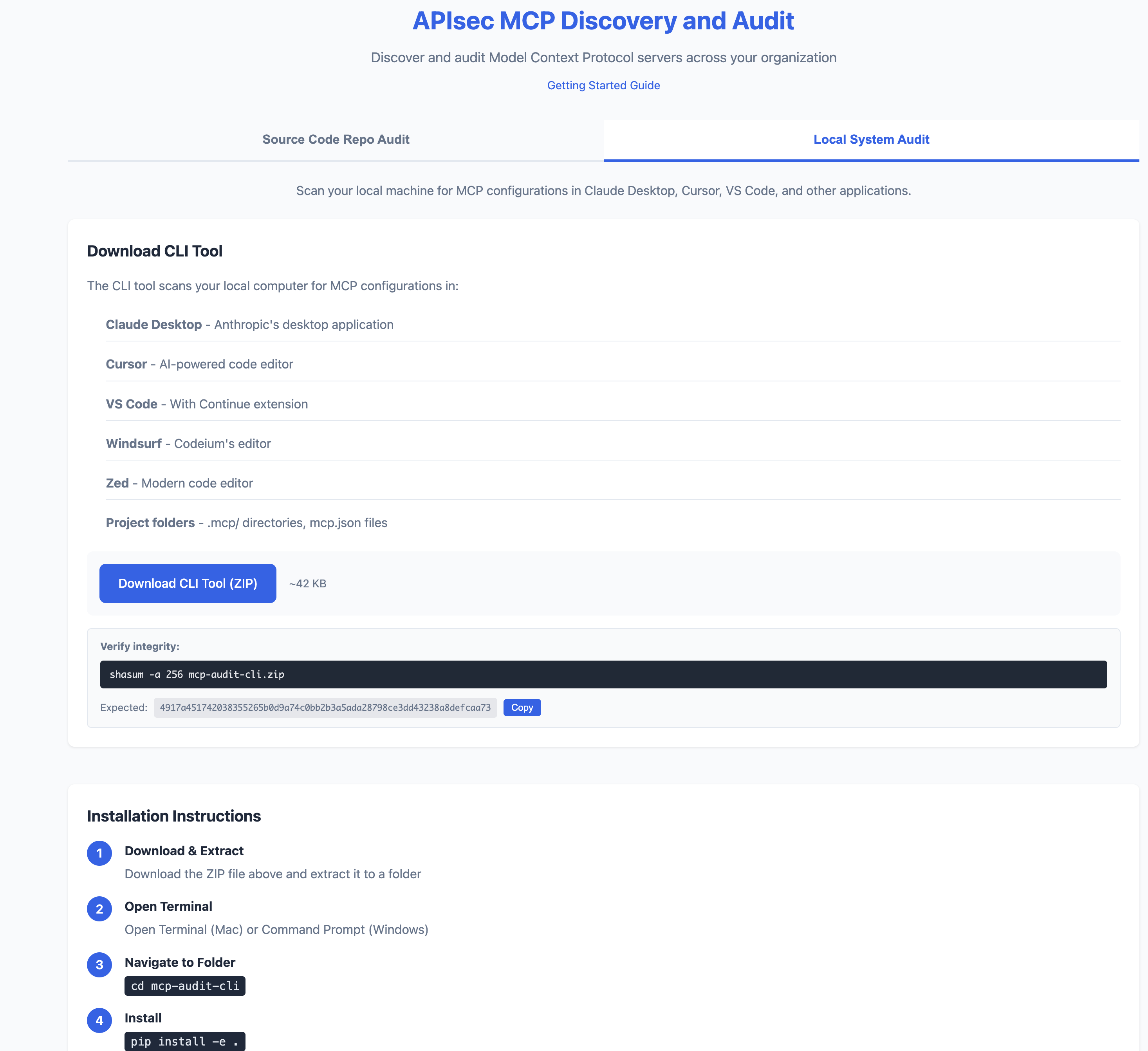
클리
퀵 스타트
그것이 하는 일들
MCP 감사는 AI 개발 도구(클로드 데스크톱, 커서, VS Code)를 스캔하여 다음과 같은 결과를 보여줍니다:
- 비밀 - 노출된 API 키, 토큰, 데이터베이스 비밀번호
- API - AI 에이전트가 연결하는 모든 엔드포인트
- AI 모델 - 어떤 LLM이 구성되어 있나요 (GPT-4, Claude, Llama)
- 위험 플래그 - 셸 접근, 파일 시스템 접근, 검증되지 않은 소스
소스 레벨 스캐닝 (v1.1에 새롭게)
mcp-audit scan MCP 서버 구성을 인벤토리에 저장합니다. 새로운 mcp-audit source-scan 명령어는 한 단계 더 나아가 MCP 서버 자체 소스 코드를 읽고 서버 작성자가 도입했을 수 있는 코드 수준의 취약점을 플래그합니다.
오늘날 이 사슬은 “Prompt In, Shell Out” 공격 체인을 포착합니다: MCP 서버가 LLM 제어 도구 인자를 셸 스폰 API(child_process.exec], util.promisify(exec), subprocess.run(shell=True), os.system, os.popen)에 파이프라인하는 MCP 서버입니다. LLM 입력을 제어하는 공격자는 셸 메타캐릭터를 주입하고 MCP 서버를 실행하는 호스트에서 임의의 코드를 실행할 수 있습니다.
출력물:
이 페이지는 AI로 자동 번역되었습니다. 기술적인 세부 사항은 원문을 확인하세요.
README
원문 README의 일부입니다. 원문 보기.
MCP Audit


See what your AI agents can access - before they go live.
Web App
CLI
Quick Start
# Install
pip install -e .

# Scan your machine
mcp-audit scan

# Or try the web app (no install)
# https://apisec-inc.github.io/mcp-audit/?demo=true
What It Does
MCP Audit scans your AI development tools (Claude Desktop, Cursor, VS Code) and reveals:
- Secrets - Exposed API keys, tokens, database passwords
- APIs - Every endpoint your AI agents connect to
- AI Models - Which LLMs are configured (GPT-4, Claude, Llama)
- Risk Flags - Shell access, filesystem access, unverified sources
⚠️  2 SECRET(S) DETECTED - IMMEDIATE ACTION REQUIRED

[CRITICAL] GitHub Personal Access Token
  Location: github-tools → env.GITHUB_TOKEN
  Remediation: https://github.com/settings/tokens → Delete → Recreate

[HIGH] Database Connection String
  Location: postgres-mcp → env.DATABASE_URL
  Remediation: Rotate credentials, use secrets manager
Source-level Scanning (new in v1.1)
mcp-audit scan inventories MCP server configurations. The new mcp-audit source-scan command goes one level deeper — it reads the MCP server’s own source code and flags code-level vulnerabilities the server author may have introduced.
Today it catches the “Prompt In, Shell Out” attack chain: an MCP server that pipes an LLM-controlled tool argument into a shell-spawning API (child_process.exec, util.promisify(exec), subprocess.run(shell=True), os.system, os.popen) without sanitization. An attacker controlling the LLM input can inject shell metacharacters and execute arbitrary code on the host running the MCP server.
$ mcp-audit source-scan ./packages/my-mcp-server

MCP source-scan: packages/my-mcp-server
1 critical · 0 high · 1 finding(s) total

  Severity  Conf  File:Line      API                                          Snippet
  CRITICAL  high  server.js:19   util.promisify(child_process.exec) ...       const { stdout } = await execAsync(
Outputs:
--format table(default, human-readable)--format json(CI integrations, jq pipelines)--format sarif(upload to GitHub code-scanning / GitLab / similar)
Gate merges on critical findings:
mcp-audit source-scan ./my-mcp --exit-code
The scanner is intentionally narrow — it only opens files that look like MCP server source (imports an MCP SDK). It won’t try to find shell-injection bugs in random Node / Python code; that’s not the job.
설치
docker run -v $(pwd):/scan mcp-audit scan